Choosing the right school camp is about much more than finding somewhere for students to stay for a few nights. A great school camp should support your learning objectives, build confidence and connection, reduce pressure on teachers and give students an experience they will remember for years.
For schools comparing school camps in Victoria, there are several important things to consider before making a booking.
1. A Program That Matches Your School's Goals
Every school camp should have a clear purpose.
For some schools, camp is about helping students build new friendships and settle into a new year level. For others, the focus may be leadership, resilience, teamwork, independence or simply giving students the opportunity to experience something outside their everyday environment.
Before choosing a venue, ask:
- Can the program be adapted to different year levels?
- Can activities support our school's objectives?
- Is there a balance between challenge, teamwork and fun?
- Are students encouraged to reflect on what they have learned?
The strongest school camp programs do more than keep students busy. They create opportunities for students to learn about themselves and each other.
2. Fully Facilitated Activities
One of the biggest differences between school camp venues is the level of facilitation provided.
A fully facilitated school camp can significantly reduce the workload placed on teachers. Rather than teachers having to lead every activity, manage equipment and constantly move students through the program, trained facilitators can take responsibility for activity delivery.
This allows teachers to focus on their students, observe group dynamics and enjoy the experience alongside them.
When comparing school camps, ask exactly what “facilitated” means and how much responsibility will remain with school staff during the program.
3. A Wide Range of Activities
A good school camp should offer enough variety to keep students engaged and give different personalities the opportunity to succeed.
Not every student will be excited by heights or physical challenges, so a strong program should include a mix of adventure, teamwork, problem-solving and personal-development activities.
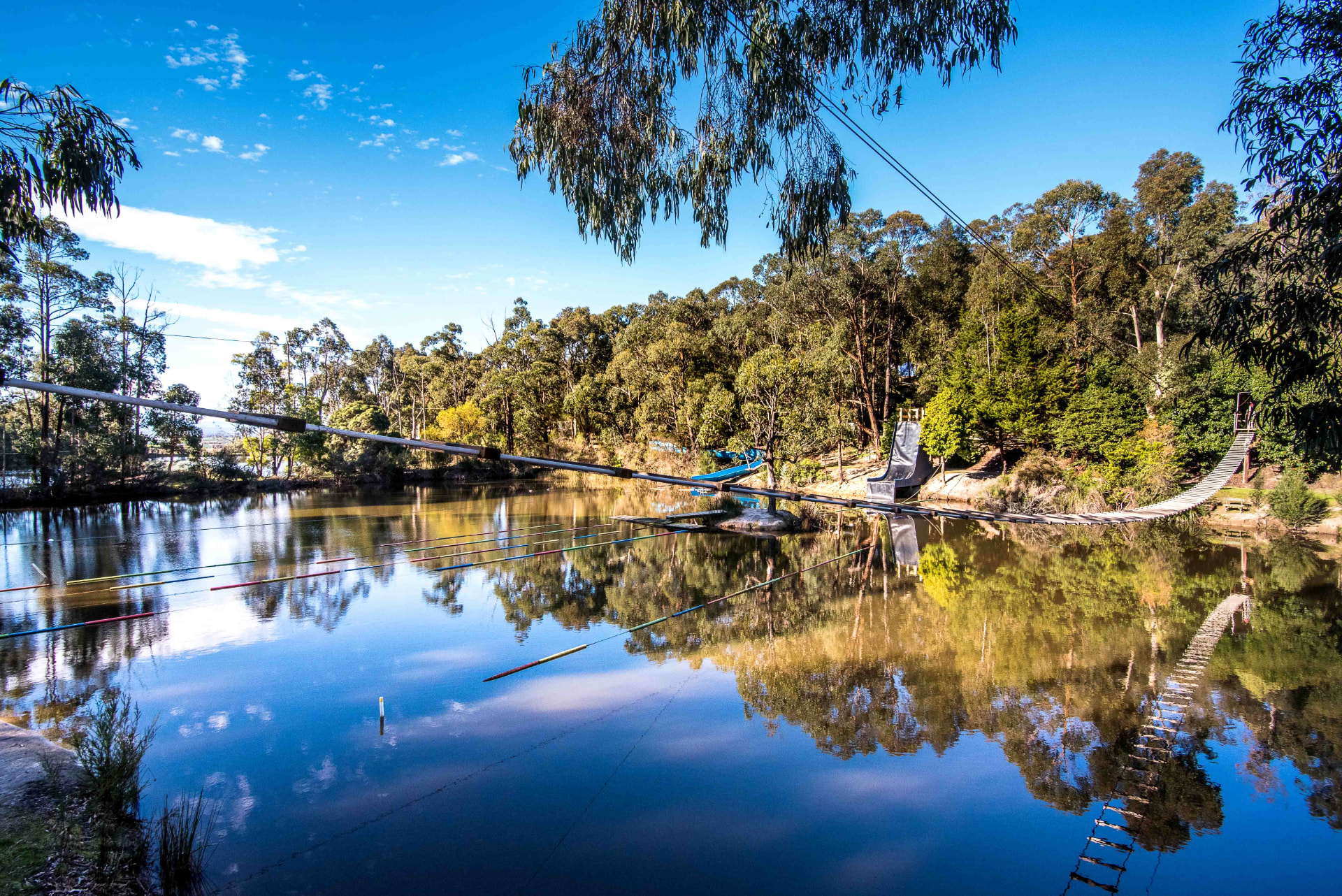
At The Summit, school groups can access more than 40 adventure and team-based activities, allowing programs to be designed around the age, confidence and objectives of each group.
Look for a venue that provides opportunities for students to:
- challenge themselves
- work as a team
- solve problems
- communicate
- support other students
- experience personal achievement
The best camp experiences often come from students achieving something they did not initially believe they could do.
4. Safety and Risk Management
Safety should be one of the first questions a school asks when comparing camp venues.
Schools should feel confident that the venue has established procedures for managing activities, facilities, equipment and participant wellbeing.
Ask prospective venues about:
- activity procedures
- staff training
- risk assessments
- equipment inspections
- emergency procedures
- incident management
- supervision expectations
- medical and dietary information processes
Schools should also clearly understand their own supervision responsibilities before arriving at camp. Our resources library includes risk assessments, emergency planning and staff training documentation schools can use in their own planning.
A good camp provider should be comfortable discussing safety and explaining how risks are managed.
5. Accommodation Suitable for School Groups
Accommodation can have a significant impact on the overall camp experience.
Consider whether the accommodation is suitable for the age and size of your group and whether teachers can supervise students effectively.
Important questions include:
- How many students sleep in each room?
- Where are teacher rooms located?
- How many bathrooms and toilets are available?
- Are different groups separated appropriately?
- Is accommodation close to activities and common areas?
- What happens if a student becomes unwell during the night?
Schools should also consider whether the venue can comfortably accommodate the entire group without compromising supervision or student experience. The Summit sleeps up to 309 guests across cabins, bungalows and lodges.
6. Catering and Dietary Requirements
Food is an important part of any school camp.
Students need enough food to stay energised throughout busy days of activities, while schools also need confidence that dietary requirements can be managed appropriately.
Before booking, ask:
- How are dietary requirements collected?
- What dietary needs can be accommodated?
- How are meals organised for large groups?
- Are snacks included?
- Is there a clear process for communicating allergies and medical dietary needs?
Schools should provide accurate dietary information within the venue's required timeframe so catering teams have time to prepare.
7. Location and Travel Time
The location of your camp matters.
A venue that is too far away can increase transport costs, shorten activity time and create a long day for students and teachers.
Many schools searching for school camps in Victoria look for venues that feel like a genuine getaway without requiring an entire day of travel.
The Summit is located in Trafalgar East, Gippsland, around 90 minutes from Melbourne, making it accessible for schools travelling from Melbourne, Gippsland and surrounding areas.
8. Support for Teachers
Teachers are often responsible for organising camp while still managing their normal workload.
A good camp provider should make the planning process as simple as possible.
Look for a venue that provides:
- clear pre-camp information
- straightforward communication
- program support
- accommodation planning
- dietary processes
- activity schedules
- documentation schools can use during their own planning
The easier the administrative process is before camp, the more teachers can focus on preparing students for the experience itself.
9. Experience With Your Year Level
A Year 3 camp should not look the same as a Year 7 camp.
Likewise, programs for senior secondary students should offer a different level of challenge and independence.
Ask whether the venue regularly works with students of your age group and how programs are adjusted accordingly.
For example, Year 7 school camps often focus heavily on connection, belonging, teamwork and helping students develop confidence as they transition into secondary school.
Primary school camps may place more emphasis on independence, friendship and first-time camp experiences.
10. Reviews and School Testimonials
Before choosing a camp, look at what other schools have said about the venue.
Google reviews, school testimonials and repeat bookings can provide useful insight into:
- staff quality
- organisation
- activities
- accommodation
- catering
- communication
- overall student experience
Pay particular attention to comments from teachers and school organisers because their experience often reflects both what happened during camp and how easy the planning process was beforehand.
11. Value, Not Just Price
The cheapest school camp is not always the best-value school camp.
When comparing quotes, make sure you understand exactly what is included.
A lower price may exclude activities, facilitation, catering or additional services that are included elsewhere.
Consider the total experience:
- accommodation
- meals
- activities
- facilitation
- program planning
- teacher support
- facilities
- overall student outcomes
The question should not simply be, “Which camp is cheapest?” It should be: which camp gives our students and teachers the best overall experience for the investment?
Choosing the Right School Camp in Victoria
The right school camp should make students feel challenged, supported and connected while making the planning process manageable for teachers.
Before booking, look beyond the activity list and consider the entire experience: the program, accommodation, catering, facilitation, safety processes, location and support provided to your school.
The Summit delivers fully facilitated school camps in Victoria from our adventure venue in Trafalgar East, Gippsland. With accommodation, catering and more than 40 activities available in one location, programs can be tailored for primary schools, secondary schools, Year 7 groups, leadership programs and outdoor education experiences.
If you are planning your next school camp, explore our School Camps Victoria programs or contact The Summit team to discuss what would work best for your students.
Planning a school camp in Victoria? Download the School Information Pack or enquire for available dates.